When you work with young people, especially those who’ve been pushed to the margins, you quickly learn that traditional educational tools often fail. PowerPoints bore us. Long explanations go into the void. And even the most dedicated youth workers sometimes struggle to break through.
That’s why participating in Drawn Together: Visual Tools for Youth Work felt like stepping into a different universe, one where creativity became a connector rather than a luxury, and where drawing wasn’t about being “good” but about being human. Here are the most surprising and impactful takeaways that changed how we think about facilitation, inclusion, and youth empowerment.
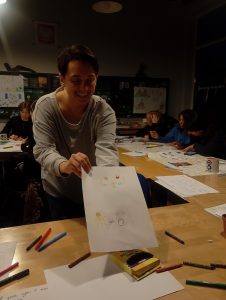
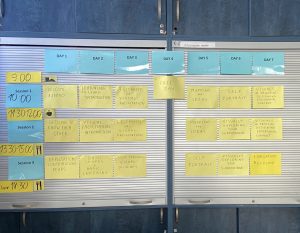
The Drawn Together training course took place in Puck, Poland, from 3 to 11 November 2025, right on the Baltic Sea coast. Hosted by the Autokreacja Foundation, the project brought together youth workers from across Europe to explore visual tools for education. We were proud to send our Dutch team to participate and represent our organisation.
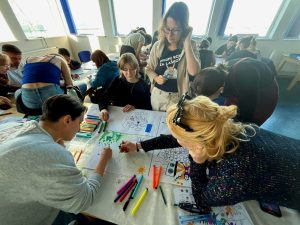
You don’t need to be able to draw to communicate visually
Most of us walked in convinced we were “bad at drawing.” The trainers anticipated this insecurity. What we have learnt from the Training at the beginning was: “If right now you are thinking that you cannot draw, fear not! This project is exactly for you.”
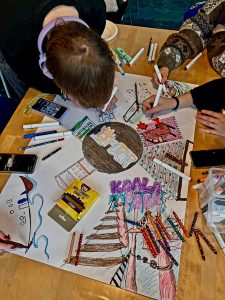
It turns out that visual facilitation is less about artistic skill and more about using simple shapes, icons, and styles that anyone can learn. This wasn’t just encouraging, it was liberating. The moment you stop aiming for perfection, your visual language starts to emerge naturally.
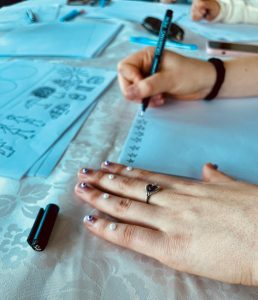
Drawing helps build trust faster than words alone
There’s something disarming about a hand-drawn scribble. It’s imperfect. It’s human. It signals humility. When our trainers, experts with years of experience, doodled openly instead of hiding behind slides, it made the learning space feel more equal and safe.
Youth workers know that trust is the foundation for every meaningful intervention. Visual tools give us a surprisingly effective shortcut to building it.
Behind every drawing exercise is a deeper theory of learning
It turns out that visuals aren’t just cute add-ons; they tap into how memory and cognition actually work. We combined text with icons, or emotions with expressive characters, and thanks to that, we activate more neural pathways. The training made it clear: visuals aren’t making learning simpler; they make it stickier.
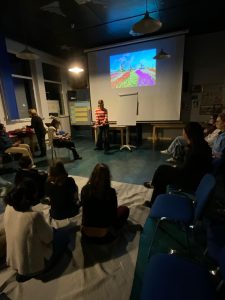
Creativity is culturally universal, but the stories behind visuals are not
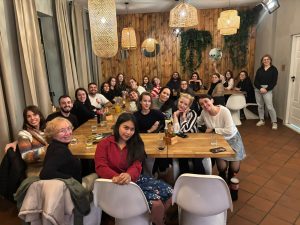
One of the project’s most insightful aspects was its multicultural mix. Because participants shared rooms, our conversations extended far beyond training hours.
We noticed that while everyone could draw a “house,” “heart,” or “sad face,” the meaning behind visuals varied. Visual facilitation became a tool not only for teaching but also a part of the intercultural dialogue. Our sketches started reflecting the real diversity of our learners, not the generic icons often used in mainstream training.